
What Is IPTV? (UK Guide 2026): Meaning, How It Works, Types, and Legality
What is IPTV? IPTV (Internet Protocol Television) is a way to deliver TV content over the internet instead of traditional cable or satellite. With IPTV, live channels and on-demand video are sent through IP networks (the same kind of network technology used for websites and streaming) and played on compatible devices.
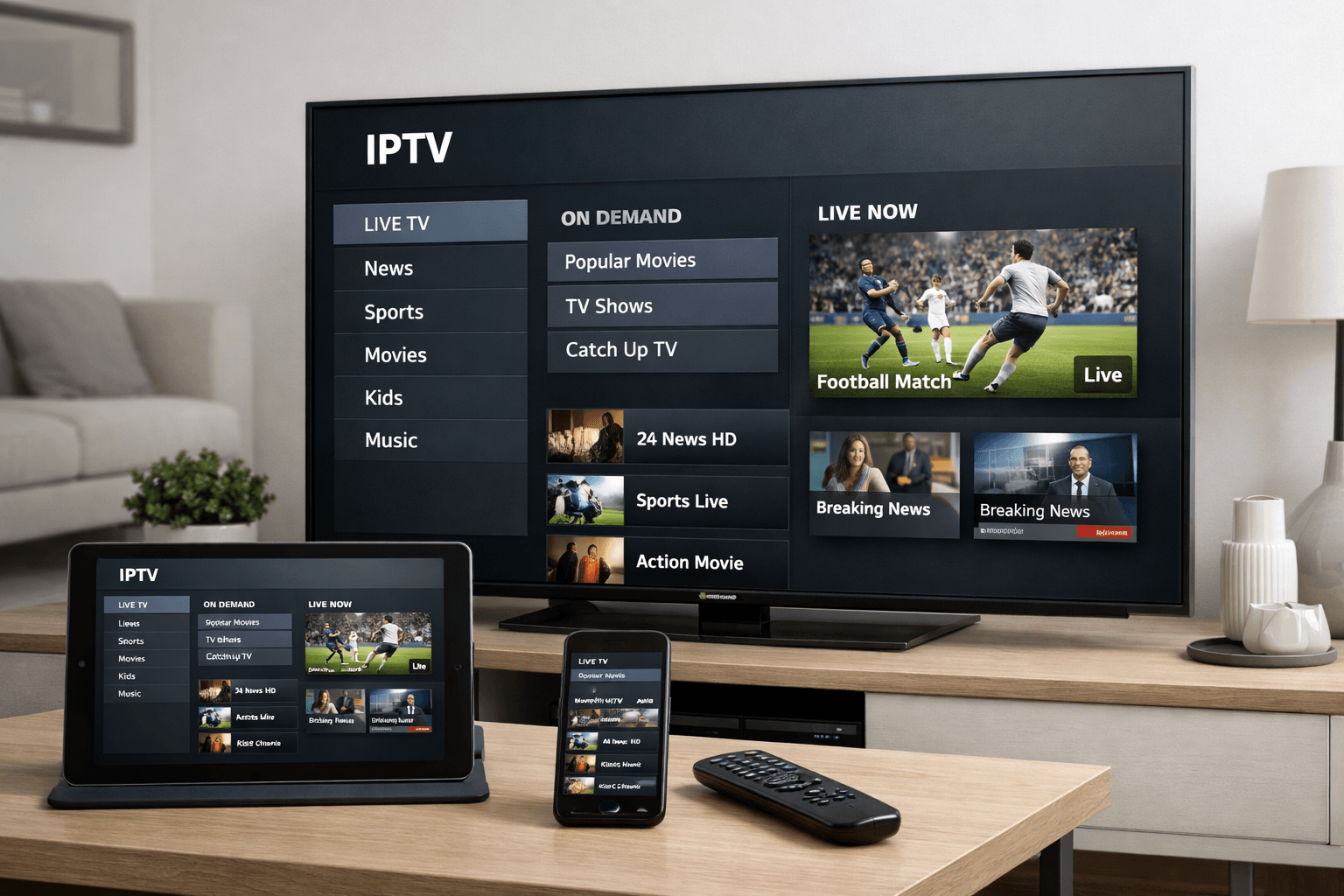
- Image prompt: Photorealistic UK living room. A large smart TV displays a clean, generic “What is IPTV?” explainer screen with neutral icons (Live TV, VOD, Catch-Up, EPG, Devices) and a simple diagram arrow: Internet → IPTV App → TV. No logos, no channel names, no copyrighted thumbnails. One streaming box and one remote on the table, plus a smartphone showing the same generic IPTV explainer screen. Soft natural lighting, realistic reflections, professional product photo, 16:9, high detail.
- SEO filename: what-is-iptv-uk.webp
- Exact alt text: what is iptv explained with a smart tv and mobile devices showing a generic internet tv interface
What is IPTV?
What is IPTV in simple terms? It’s television delivered over the internet (IP) instead of broadcast signals. An IPTV platform can provide live TV, video libraries, and catch-up features depending on how the service is built and what content it’s authorised to distribute.
Important: IPTV is not one single app. It’s a delivery method—different providers and players can offer very different experiences.
How does IPTV work?
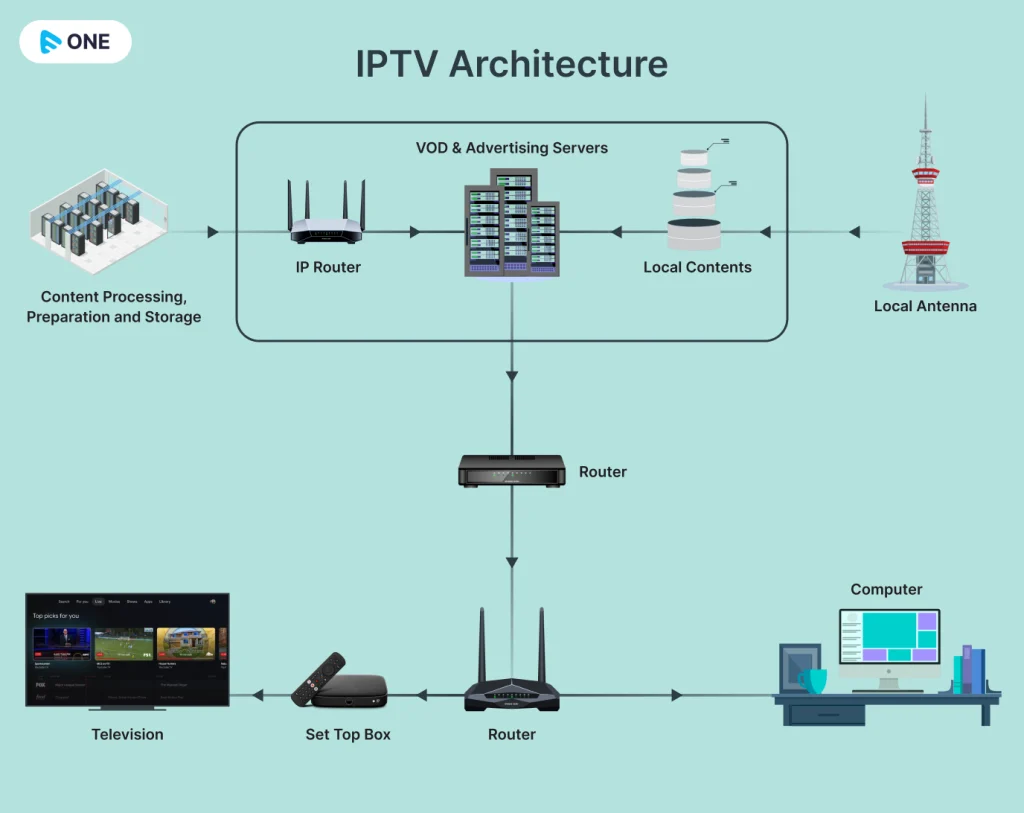
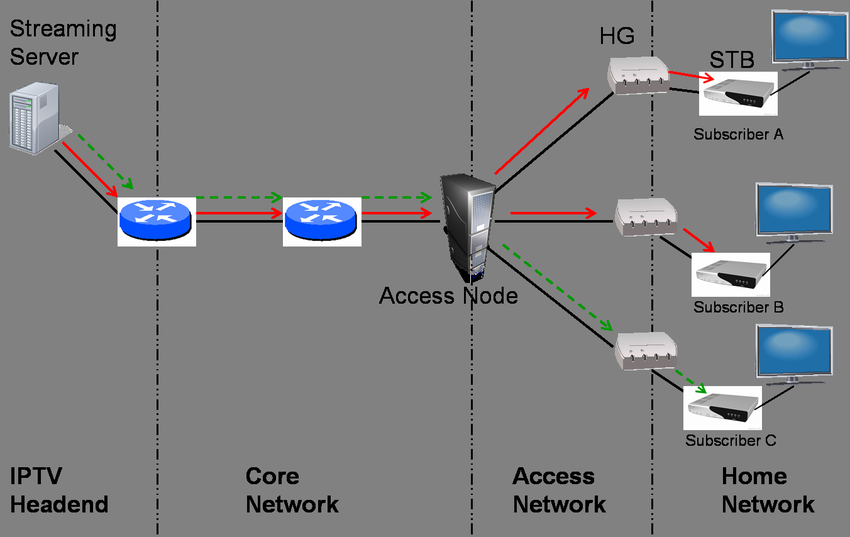
IPTV sends TV content as digital data over your internet connection. Instead of broadcasting every channel to everyone at once, IPTV typically delivers the stream you request.
In a basic IPTV chain, it often looks like this:
- Content sources (managed by a provider)
- Encoding + servers (video is prepared for streaming)
- Delivery over IP networks (sometimes with CDNs for performance)
- Playback on your device using an IPTV app or player
Types of IPTV
Live IPTV
Live IPTV streams channels in real time, similar to traditional television—but delivered through the internet.
Video on Demand (VOD)
VOD lets you choose and watch shows or movies whenever you want, rather than following a broadcast schedule.
Time-shifted IPTV (catch-up)
Time-shifted IPTV (often called catch-up TV) lets you watch programmes after they air, when supported by the platform.
Related: IPTV services explained • IPTV player explained
IPTV vs traditional television
| Aspect | IPTV | Traditional TV |
|---|---|---|
| Delivery method | Internet Protocol (IP) | Cable / Satellite / Broadcast |
| On-demand options | Often available | Usually limited |
| Device support | Multiple devices | Mostly TV set |
| Flexibility | High (depends on service) | Lower |
Key benefits of IPTV
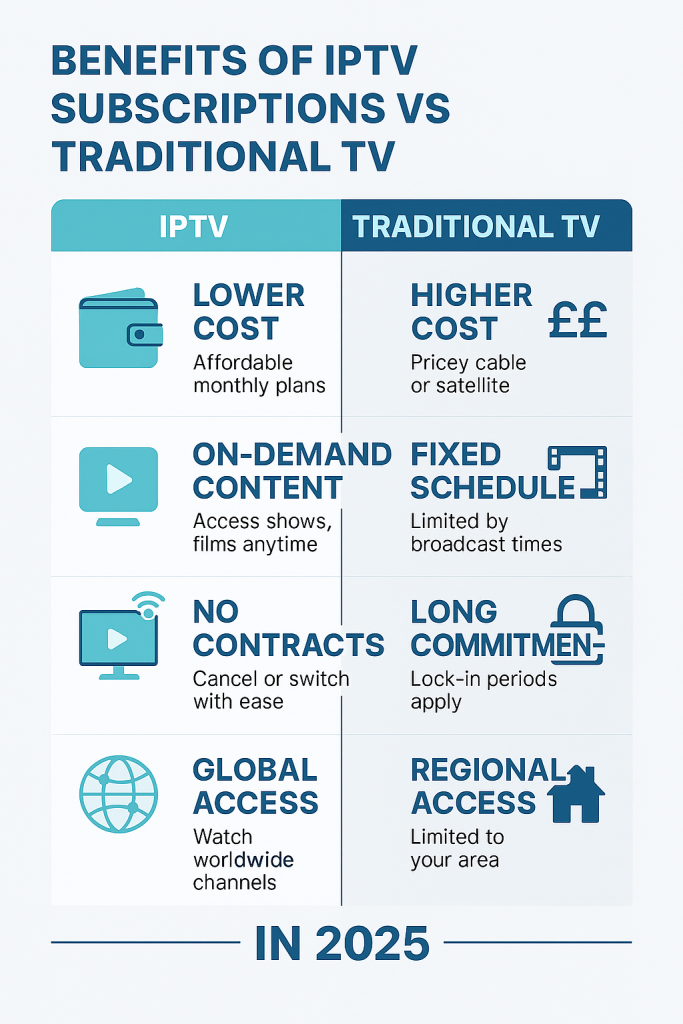
- Flexible viewing (live + on-demand depending on platform)
- Can support HD and 4K where bandwidth allows
- Works across many device types
- Efficient delivery (streams requested content)
In real use, performance still depends on broadband stability, Wi-Fi quality, and how well the service is operated.
Devices used for IPTV
IPTV can be accessed on:
- Smart TVs
- Phones and tablets
- Computers and laptops
- Streaming devices (Android TV, Fire TV, etc.)
- Set-top boxes (depending on the provider)
Is IPTV legal in the UK?
IPTV technology is legal. Whether a specific IPTV service is legal depends on licensing and permission to distribute the content. If a provider is unclear about policies, support, or responsible use, treat that as a risk signal.
Summary
What is IPTV? IPTV is a method of delivering television content through internet protocol networks. It can support live TV, on-demand viewing, and catch-up features depending on the provider’s platform and licensing.