

IPTV Playlist: What It Is, How It Works, and What to Know (UK Guide)
An IPTV playlist is one of the most common ways people load live channels and categories into an IPTV player. Playlists help organise streams, but reliability and legality depend on the source of the links.
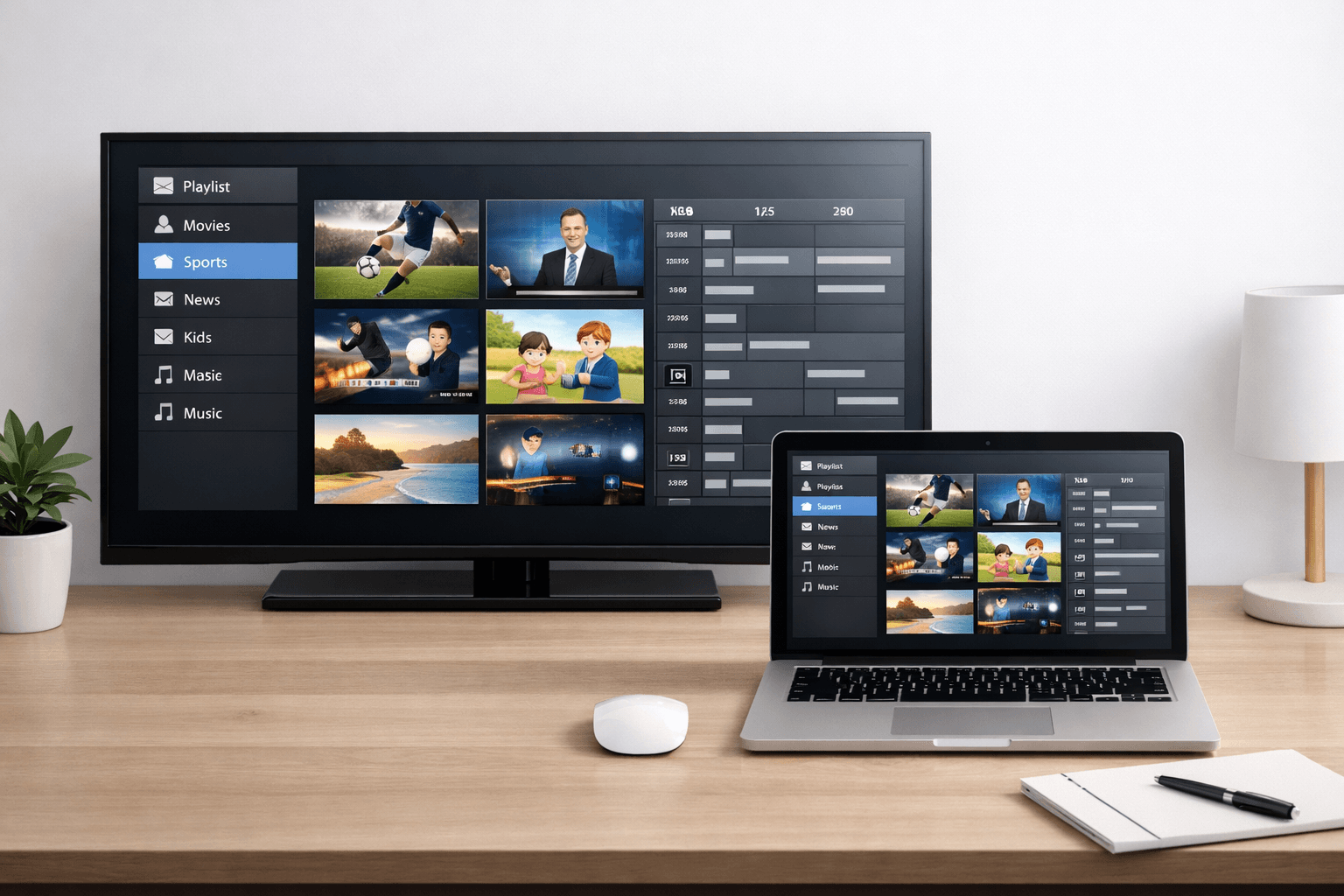
An IPTV playlist is one of the most common ways people access IPTV streams. Whether you’re testing IPTV technology or using a full service, playlists play a central role in how channels and links are organised and delivered inside an IPTV player.
This guide explains what an IPTV playlist is, how it works, and why many users eventually move from basic playlists to more structured solutions.
📌 What Is an IPTV Playlist?
An IPTV playlist is a digital list of streaming links that an IPTV player reads to display live TV channels, films, series, or on-demand categories. The most common format is M3U (and M3U8), though other formats exist.
The playlist itself does not “broadcast” anything — it simply tells your IPTV player where to find the streams. If a link goes offline or changes, that entry may stop working in your player.
🔄 How IPTV Playlists Work
IPTV playlists typically work like this:
- A playlist file or URL is added to an IPTV player
- The player reads the playlist structure (names, groups, links)
- Channels and categories appear in the interface
- Streams load when you select a channel
As long as the links in the playlist remain active and reachable, the content can play.
📂 Common IPTV Playlist Formats
The most widely used IPTV playlist formats include:
- M3U / M3U8 – the most common “industry standard” format
- TXT playlists – basic lists used by some apps
- URL-based playlists – hosted playlists updated remotely
Many users prefer M3U because it can support grouping, logos, and (with the right setup) programme guide data.
⭐ Why IPTV Playlists Are Popular
Users often choose an IPTV playlist because it can be:
- Easy to load into many IPTV players
- Compatible across devices (TV boxes, phones, tablets, PCs)
- Useful for testing IPTV apps quickly
- Flexible for basic use cases
For beginners, a playlist is often the first hands-on step into IPTV streaming.
⚠️ Common Limitations of IPTV Playlists
While useful, an IPTV playlist can have drawbacks:
- Streams can stop working without notice
- Channel availability may change frequently
- There’s usually no built-in support
- Quality depends entirely on the stream source and your connection
- Manual updates may be required
Because of this, playlists alone are not always ideal for long-term, “set it and forget it” viewing.
🆚 IPTV Playlist vs IPTV Service
| Aspect | IPTV Playlist | IPTV Service |
|---|---|---|
| Content management | Manual | Managed |
| Stability | Varies | Usually higher |
| Support | None | Often included |
| Updates | Manual or inconsistent | Often automatic |
| Long-term use | Limited | Designed for it |
Many users start with an IPTV playlist and later move to a structured solution for better reliability and easier maintenance.
🛒 Commercial Insight: Why Users Upgrade From Playlists
From a practical standpoint, people often move beyond basic playlists because managed setups can offer:
- Better uptime and fewer dead links
- Cleaner organisation and easier navigation
- More consistent playback
- Less manual maintenance
Playlists are a useful tool — but structured solutions can be easier for everyday viewing.
📱 Devices That Support IPTV Playlists
An IPTV playlist can be used on:
- Smart TVs (app-dependent)
- Streaming devices and TV boxes
- Smartphones and tablets
- Computers and laptops
Compatibility depends on the IPTV player you use, not the playlist itself.
⚖️ IPTV Playlists and Legal Considerations
IPTV playlists are neutral files, but the content they link to must be properly licensed. Legality depends on where the streams originate and how they’re distributed.
If you’re evaluating any setup, prioritise transparency and only access content you’re authorised to view.
🧠 Final Thoughts
An IPTV playlist is a fundamental part of IPTV streaming. It helps your player organise and access streams over the internet. While playlists are great for learning and testing, many users eventually prefer more structured solutions for stability, quality, and convenience.
Understanding how IPTV playlists work makes it easier to choose the right setup for your home and devices.
🌐 External Resources
- M3U playlist format (Wikipedia)
- IPTV definition (Wikipedia)
- Streaming media overview (Wikipedia)
- What streaming means (Cloudflare Learning)
- IPTV community discussions (Reddit)