

Is IPTV Legal in the UK? Clear Explanation + Safe Checklist
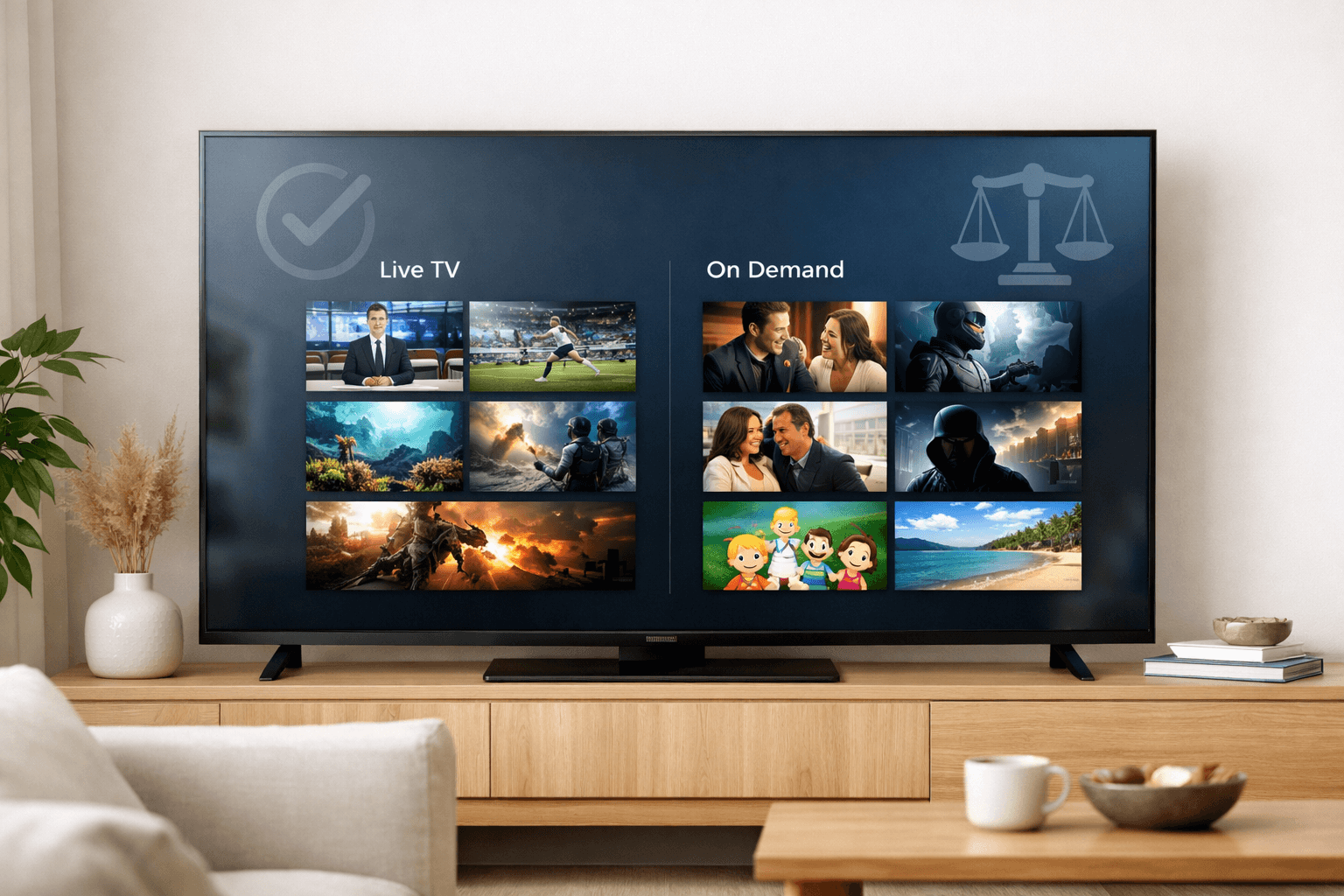
People ask “Is IPTV legal?” because IPTV is everywhere — on smart TVs, streaming boxes, and apps.
The clean answer is: IPTV technology itself is legal. It’s simply a way to deliver TV/video over the internet.
What matters legally is the rights: whether the provider is authorised to distribute the content they offer.
IPTV can be completely legitimate when content is properly licensed.
If a service can’t explain authorisation/licensing, hides basic business details, or promises “everything for almost nothing,”
treat that as a major risk signal.
What you’ll learn
- What IPTV actually means (and what it doesn’t)
- When IPTV is legal in the UK (simple rule)
- Common misconceptions (apps, Firestick, VPN)
- A practical checklist to choose responsibly
- Safe official resources (UK)
Related internal guides
(Use these to build a safer setup and understand basics. Update URLs if your slugs differ.)
1) What does IPTV actually mean?
IPTV stands for Internet Protocol Television. It means TV/video delivered over internet networking rather than
traditional broadcast methods like satellite or cable. That’s it. IPTV is a transport method, not a “type of content.”
Where IPTV is used legitimately
Everyday services
- Telecom / ISP TV bundles
- Hotel TV systems
- Sports venues / commercial premises
- Education & enterprise networks
Why providers use IPTV
- Efficient delivery at scale
- On-demand libraries (VOD)
- Multi-device support
- Better analytics & personalisation
Key point: IPTV can look identical on your screen whether it’s authorised or not. That’s why “how it looks” isn’t a legal test.
2) Is IPTV legal in the UK?
Yes — IPTV as a technology is legal in the UK. The legal issue is content rights.
In simple terms: a service needs permission (licensing/authorisation) to distribute the channels, shows, films, or events it offers.
If they’re not authorised, the delivery method doesn’t “make it legal.”
People get confused because “IPTV” is used as a casual label for lots of services online.
So it helps to separate two ideas:
IPTV (the method)
A way to deliver TV/video over the internet (protocol-based streaming).
Rights to content (the legal part)
Whether the provider has permission to distribute what you’re watching.
If you’re evaluating a service, the question isn’t “Does it use IPTV?” — it’s:
“Is this content distribution authorised?”
3) Legal IPTV vs unlicensed streams: the real difference
Two services can both run through the same player apps, use the same devices, and even have similar menus —
but one is authorised and the other isn’t. Here’s the difference in a practical, non-technical way.
Signals you’re dealing with a more legitimate setup
- Clear business identity (company details, support contacts, policies)
- Transparent terms (what’s included, device limits, refunds/complaints handling)
- Explains how access works without unrealistic promises
- Encourages users to follow local laws and authorised viewing
Red flags (high risk signals)
- “Every channel/event worldwide for extremely low cost” with no explanation
- No real company details, only anonymous chat handles
- Pressure tactics (“limited time, pay now, no questions”)
- Dodges questions about authorisation/licensing
- Encourages bypassing enforcement or “staying hidden”
This isn’t about judging anyone — it’s about recognising risk. Transparency is one of the strongest trust signals.
4) When IPTV is typically legal for viewers
From a viewer perspective, IPTV is generally on the safer side when the service is
authorised to distribute its content and operates transparently.
In plain language: you should be able to understand what you’re paying for and who you’re paying.
Good questions to ask (simple)
- Who is the provider and how do I contact them?
- What does the subscription include (and not include)?
- How do device limits work?
- Where are policies (refunds, privacy, terms)?
Good pages to have (trust signals)
If a service refuses to provide basics, it becomes hard for users to evaluate legitimacy and consumer protection.
5) Common misconceptions (Firestick, apps, VPN)
“Firestick = illegal”
Fire TV devices are legal hardware. The legality depends on what apps/services you use and whether content distribution is authorised.
(Same logic as phones, PCs, smart TVs.)
If you’re using Fire TV, see: Best IPTV for Firestick (what to check).
“IPTV player apps provide channels”
Most IPTV apps are players (like a media dashboard). They typically don’t include channels.
They display whatever your IPTV account/playlist supplies.
Learn the difference here: IPTV Player Apps Explained.
“Using a VPN makes it legal”
A VPN changes how your traffic routes and may improve privacy on public Wi-Fi, but it
does not change whether content is authorised. Legality still comes down to rights/licensing.
6) How to choose responsibly: a practical checklist
If your goal is to stay safer (and avoid surprises), use a checklist approach.
This is also how most experienced households evaluate streaming services: not by hype,
but by stability, transparency, and policies.
Quick checklist (copy/paste)
- ✓ Provider identity is clear (who they are, how to contact)
- ✓ Transparent policies (terms, privacy, refunds, support)
- ✓ Device rules are explained (streams vs registered devices)
- ✓ Payment and billing are explained clearly
- ✓ No “too good to be true” promises with zero details
- ✓ Encourages authorised viewing and legal compliance
IPTV Setup Guide (UK) and
Firestick checklist.
This content is informational. If you’re unsure about a specific service’s authorisation,
consider checking official guidance or getting legal advice.
7) Privacy & safety basics (UK households)
Even when legality is the main question, good digital hygiene matters.
Streaming accounts can involve personal data (email, device IDs, payment metadata).
Use basic steps that reduce risk and improve reliability:
Safer setup
- Use strong, unique passwords for accounts
- Don’t reuse passwords from email/banking
- Keep devices updated (Fire OS / Android / TV firmware)
- Prefer Ethernet for main TV if possible
Consumer clarity
- Read refund/terms before paying
- Confirm device limits before purchasing
- Know how to contact support
- Keep purchase receipts and emails
8) FAQ
Is IPTV legal in the UK for watching live TV?
IPTV as a method is legal. Whether a specific stream is legal depends on whether the provider is authorised to distribute that content.
Is IPTV legal on Firestick?
Firestick is legal hardware. Legality depends on the service/content and authorisation, not the device.
Do IPTV apps provide channels?
Many popular IPTV apps are players that need a service/account/playlist.
The app itself usually doesn’t provide channels.
Can I rely on “it’s just streaming”?
Copyright and distribution rules apply online too. If content is distributed without authorisation, it can be unlawful regardless of the delivery method.