
IPTV Services Explained (UK): How They Work, Benefits, and What to Consider
IPTV services deliver TV and video over an internet connection rather than cable or satellite signals. Most services combine live TV, on-demand libraries, and sometimes replay/catch-up — but the day-to-day experience depends heavily on stream stability, device setup, and how well the service is maintained.
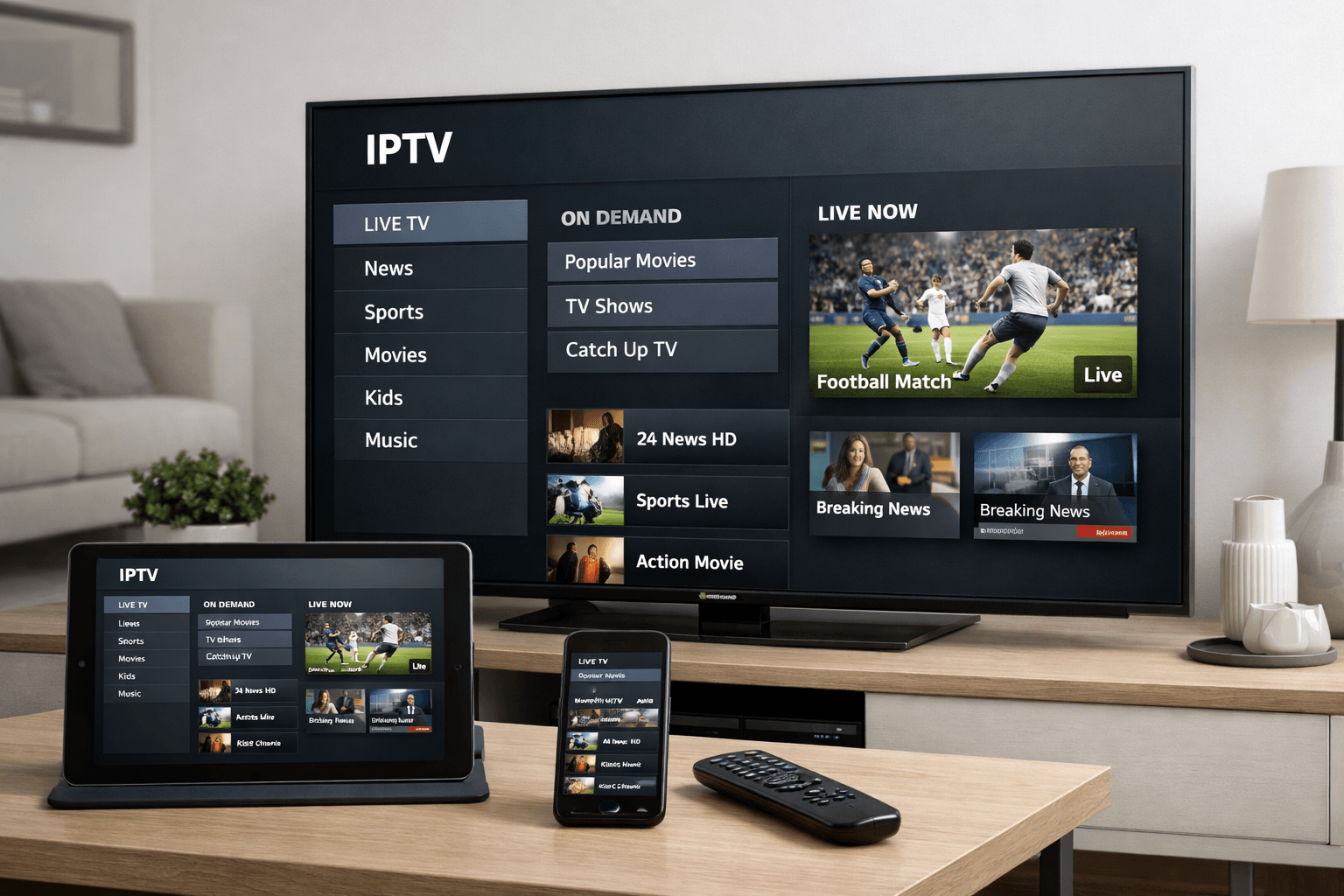
- Image prompt: Photorealistic UK living room. A smart TV shows a generic “IPTV Services” dashboard (no logos) with neutral tiles: Live TV, VOD, Catch-up, EPG, Multi-Device, Network Check, Support. A tablet and smartphone on the table show matching generic category screens. Include one streaming box and one remote. No channel names, no copyrighted content, no brand marks. Soft daylight, realistic reflections, professional product-photo look, 16:9, high detail.
- SEO filename: iptv-services-uk-explained.webp
- Exact alt text: iptv services displayed on smart tv tablet and mobile devices (UK)
Table of contents
- What are IPTV services?
- How IPTV services work (simple overview)
- Common types of IPTV services
- Why IPTV services are popular
- What to look for when evaluating IPTV services
- Reliability checklist (peak time, EPG, switching)
- Devices, apps, and setup basics
- Legality & safety basics (general overview)
- FAQ
- External resources & related posts
1) What are IPTV services?
IPTV services deliver television and video content over IP-based networks (the internet). Instead of sending every channel to everyone all the time, IPTV platforms typically stream content when you request it. That request-based approach is what makes IPTV flexible across devices and locations.
Because IPTV relies on internet infrastructure, performance depends on two things working together: your connection + the service’s upstream stability. Even a strong home connection can’t fix a service that struggles under peak-time load.
2) How IPTV services work (simple overview)
At a high level, most IPTV services follow a similar pipeline:
- Capture / sourcing: video feeds are collected from content sources.
- Encoding: the video is compressed into streamable formats.
- Delivery: streams are distributed through servers (often with CDN-like routing).
- Playback: you access the library via an app or an IPTV player on your device.
Practical takeaway: problems usually fall into two buckets — loading/library issues (login/playlist/portal) vs playback issues (buffering, stutter, lag). Treat them differently to fix them faster.
3) Common types of IPTV services
Live TV streaming
Real-time channels delivered online, similar to traditional broadcasting but via internet protocols.
- Most sensitive to peak-time load
- Switching speed matters
- EPG quality changes the daily experience
Video on demand (VOD)
Libraries of movies and series you can play at any time.
- Organisation and metadata matter
- Poster load speed affects usability
- Playback start reliability is key
Time-shifted viewing
Replay/catch-up style features that let you watch previously aired programmes (availability varies).
- Often depends on storage/recording policies
- Needs stable indexing and guide alignment
- Great when implemented consistently
Many IPTV services combine all three. The “best” experience is usually the one that keeps each part organised and stable, especially during evenings and weekends.
4) Why IPTV services are popular
Interest in IPTV services keeps growing because they offer:
- Flexible schedules: watch live or on-demand when it suits you.
- Multi-device access: TV, phone, tablet, and desktop viewing.
- International reach: broader content availability for global audiences.
- Less dependency on physical infrastructure: no satellite dish or cable line required for delivery.
The trade-off: IPTV depends more on network quality and service stability than traditional TV, so testing matters.
5) What to look for when evaluating IPTV services
From a practical UK perspective, most “good vs bad” differences show up in day-to-day friction: buffering patterns, UI lag, guide reliability, and how easy it is to use across devices.
Stability & streaming quality
- Peak-time viewing (7–11 PM UK time) is the real test
- Check whether issues happen across many channels or only a few
- Watch for “works daytime, fails at night” patterns
Content organisation
- Clean categories (less spam/duplicates)
- Favourites and search that actually help
- VOD browsing that doesn’t feel heavy or slow
Device compatibility
- Works smoothly on your main TV device (stick/box)
- Consistent behaviour across mobile and TV
- Clear rules on device limits/profiles
Setup & usability
- Easy login/playlist setup without “mystery steps”
- Fast switching and stable playback controls
- EPG that loads correctly when data exists
Support & operations
- Responsive troubleshooting (not only sales talk)
- Clear communication during outages
- Helpful steps for EPG/buffering/login issues
6) Reliability checklist (quick, realistic)
- Peak-time playback: test 7–11 PM UK time for 30–45 minutes.
- Channel switching: do 10 rapid switches (note delays and freezes).
- EPG check: refresh EPG and confirm device time/timezone is correct.
- Second device: test the same stream on a phone/tablet to isolate device issues.
- Network baseline: try Ethernet once (even temporarily) to confirm Wi-Fi isn’t the bottleneck.
If results change dramatically between Ethernet and Wi-Fi, fix the network first — it’s the highest-ROI improvement.
7) Devices, apps, and setup basics
IPTV services are accessed through apps or IPTV player software. Your device choice affects stability and UI speed, especially with very large libraries.
Devices commonly used
- Smart TVs
- Streaming sticks / boxes
- Android / iOS phones and tablets
- PC and laptop players
Setup habits that work
- Favourites-first: build a small daily list (10–30 channels)
- Hide unused categories: reduces “menu overload” and lag
- Keep storage free: low storage can cause stutter/crashes
- Restart occasionally: low-memory devices benefit from it
8) IPTV services and legality (general overview)
IPTV technology itself is legal. However, an IPTV service must have the appropriate rights and permissions to distribute the content it offers. In the UK, enforcement and legal outcomes depend on licensing, rights, and how content is provided.
Practical approach: use services with clear terms and policies, and only access content you’re authorised to view.
FAQ
Do IPTV services include an IPTV player?
Some do, and some rely on third-party player apps. Either way, the player is the interface — it doesn’t magically fix upstream instability. Your best results come from stable streams + a capable device + clean favourites/categories.
Why does buffering happen mostly at night?
Evening hours can amplify issues: more households streaming, more network congestion, and higher upstream server load. That’s why peak-time testing is more meaningful than midday checks.
What is the fastest way to judge if an IPTV service is “good”?
Run a short structured test: 30–45 minutes at 7–11 PM UK time, rapid channel switching, and an EPG check. Repeat on a second evening. Consistency is the signal.
Is Ethernet really that important?
For many homes, yes. Ethernet removes Wi-Fi interference and gives a clean baseline. Even one Ethernet test helps you identify whether your network is the bottleneck.
🌐 External resources
Neutral references (safe outbound linking).
- Internet Protocol television (Wikipedia)
- UK NCSC: Top tips for staying secure online
- How streaming works (Cloudflare)
- Clear cache (Google Support)
- Media delivery basics (Akamai)